
Reuse Existing Infrastructure
Reduce unnecessary demolition by evaluating suitable septic tanks for conversion.
Lower Project Cost
Reduce excavation and civil construction where existing infrastructure is suitable.
Énergies renouvelables
Convert suitable organic waste into clean biogas for cooking and other designed uses.
Professional Engineering
Every project begins with structural and hydraulic assessment before any conversion work.
Convert Existing Infrastructure Into Renewable Energy
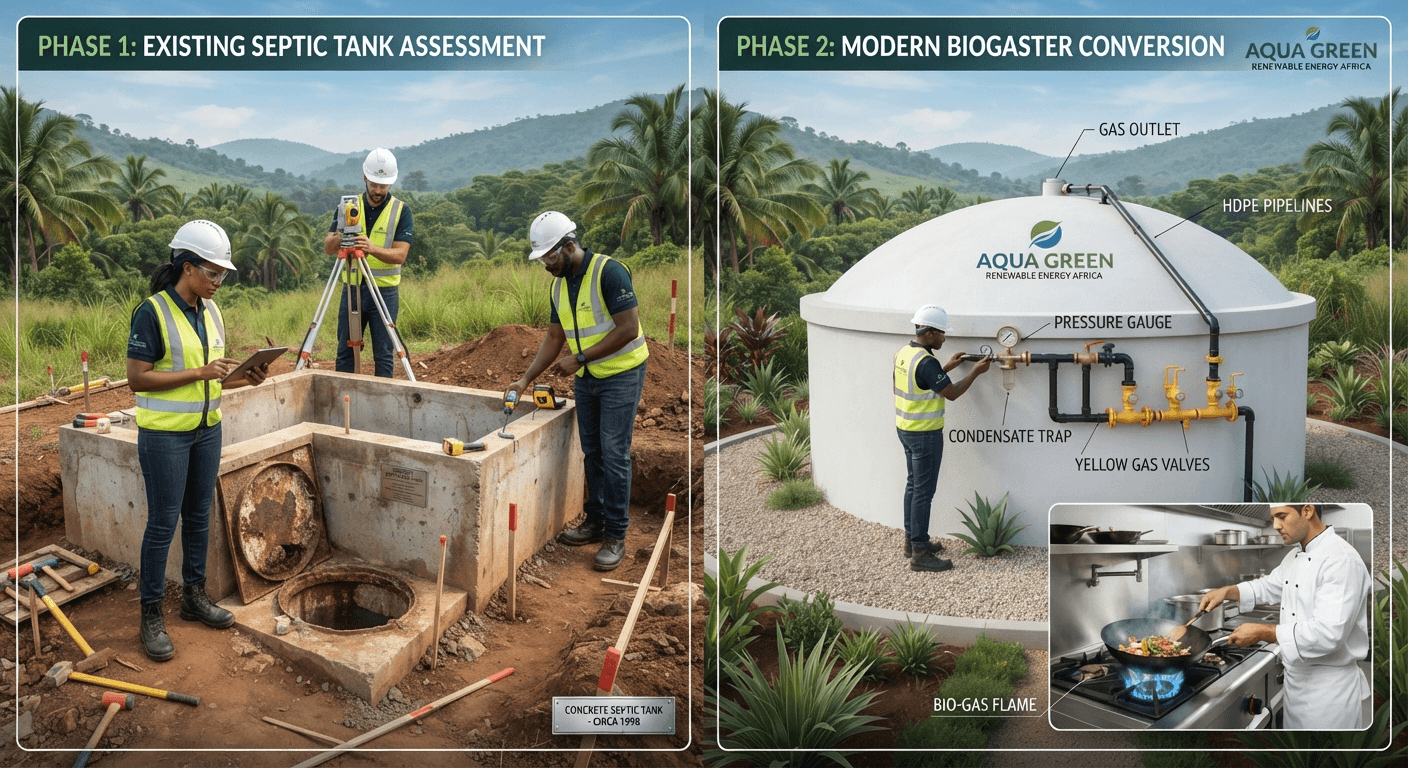
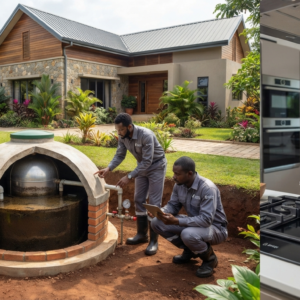
Many residential, commercial and institutional properties already possess septic tanks that may be suitable for conversion into productive biogas systems. Rather than demolishing existing infrastructure and constructing an entirely new digester, Dominion Biogas Services first performs a detailed engineering assessment to determine whether conversion or integration is technically appropriate.
Where feasible, carefully engineered modifications can transform an existing septic system into an efficient waste-to-energy installation that supports renewable gas production while improving waste management and maximising previous infrastructure investment.
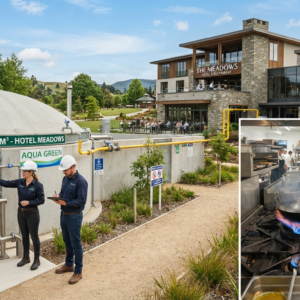
Ideal For Existing Properties
Existing household septic systems.
Multi-family residential developments.
Hotels and guest houses.
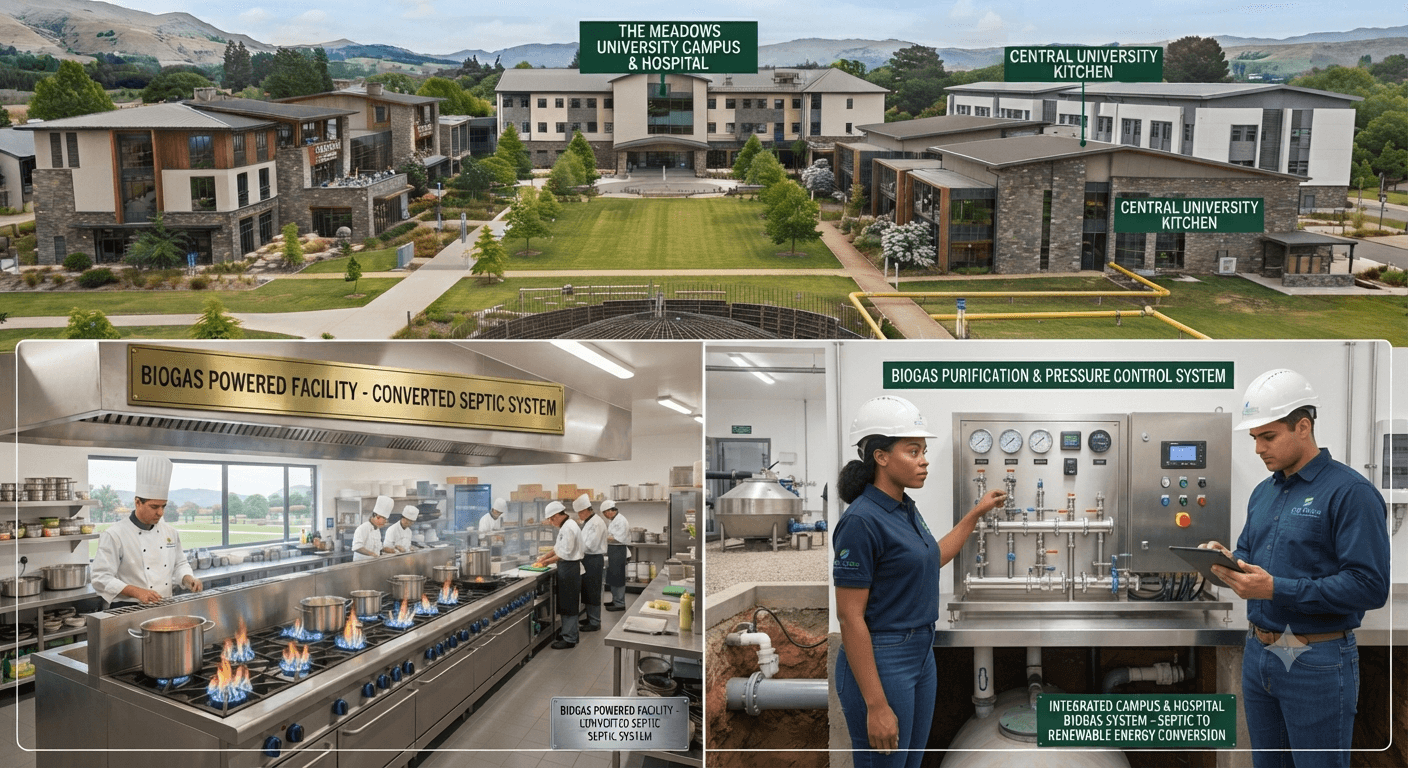
Healthcare institutions.
Boarding schools and universities.
Commercial kitchens and food businesses.
Pig, poultry and dairy operations.
Churches, prisons and government facilities.
Not Every Septic Tank Is Suitable for Conversion
Before any modification begins, Dominion Biogas Services evaluates the structure, hydraulic behaviour, existing pipework, available capacity, gas-tightness potential and operational requirements of the property. Conversion proceeds only where the existing infrastructure can be made technically appropriate and safe.
Structural Condition
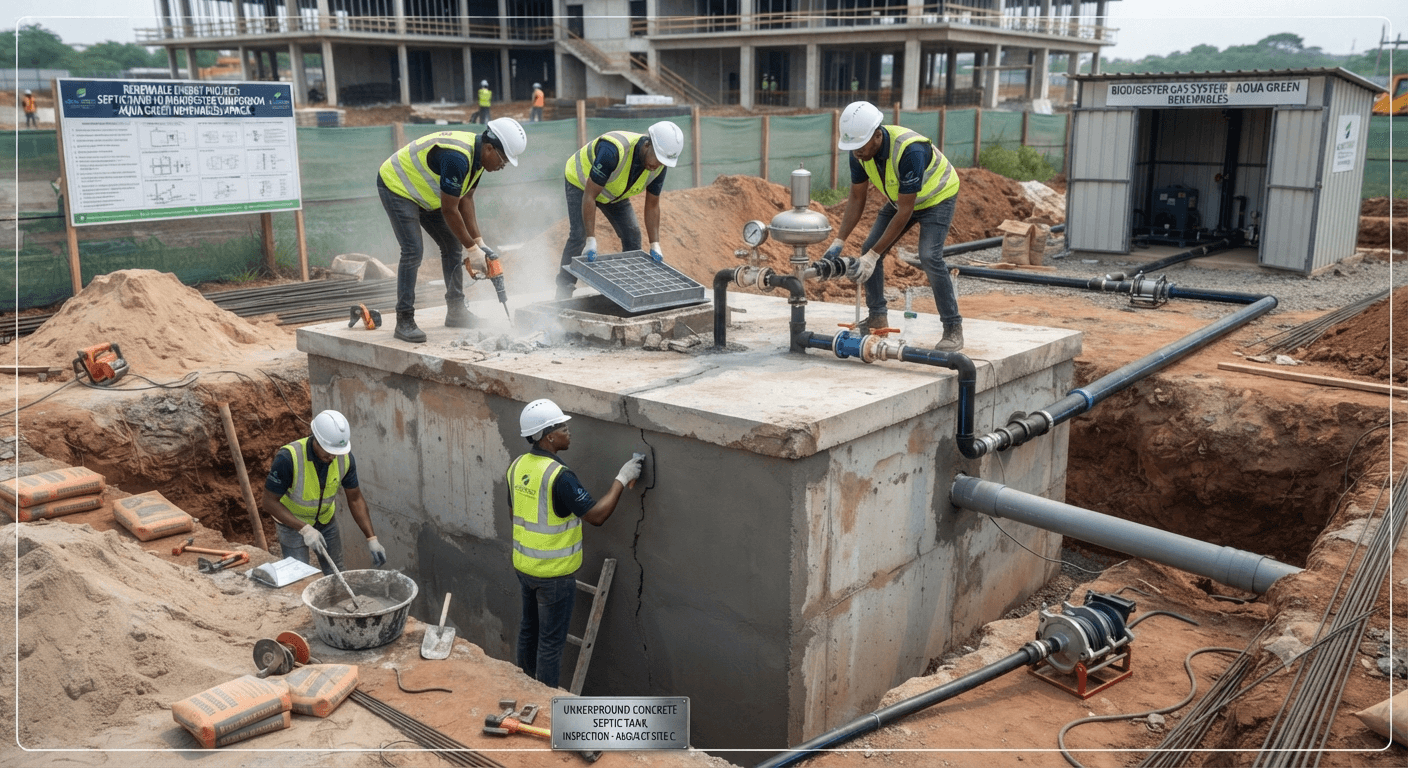
Inspection of walls, floor slab, roof slab, partitions, reinforcement and visible deterioration.
Cracks and Leakage
Assessment of water leakage, cracks, weak joints and pathways that may prevent gas-tight operation.
Internal Dimensions
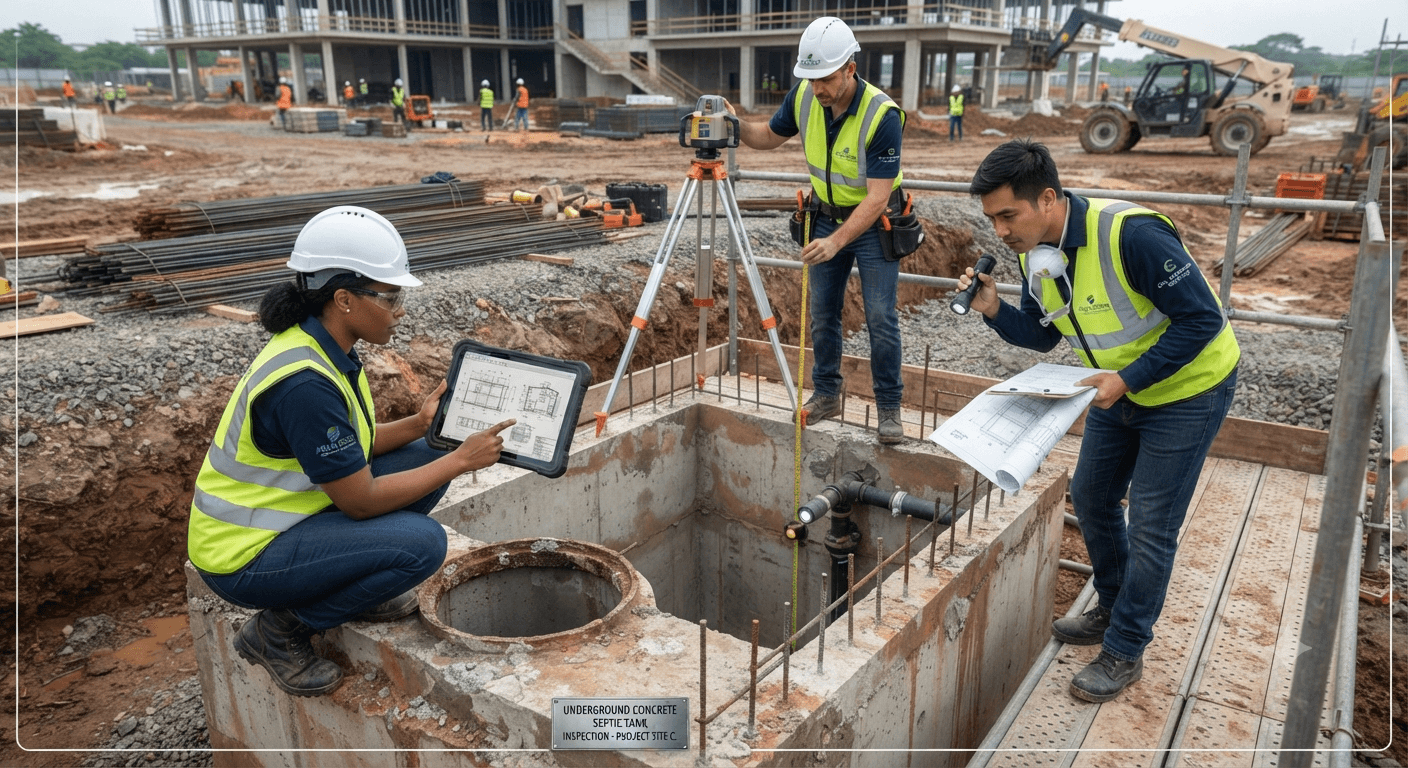
Measurement of tank length, width, depth, chamber arrangement, working volume and available headspace.
Hydraulic Performance
Review of inlet level, outlet level, flow path, retention time, slurry displacement and overflow behaviour.
Existing Waste Streams
Identification of toilet waste, kitchen waste, manure and other biodegradable materials entering the system.
Gas Production Potential
Estimation of expected biogas output based on feedstock quantity, quality, temperature and operating conditions.
Reinforcement Requirements
Determination of whether structural strengthening, plastering, waterproofing or roof modification is needed.
Safety and Site Conditions
Review of ventilation, nearby buildings, ignition sources, drainage, access and safe gas-pipeline routing.
What Our Engineers Examine
From Existing Septic Tank to Engineered Biogas System
Each conversion follows a controlled engineering process rather than an improvised modification.
Initial Consultation
We review the property, occupancy, current sanitation system and intended gas use.
Site Inspection
The septic tank, pipework, access points, drainage and surrounding structures are examined.
Cleaning and Verification
Where required, the tank is safely emptied and cleaned to allow detailed internal inspection.
Feasibility Assessment
Structural integrity, capacity, loading and gas potential are assessed.
Conception d'ingénierie
Required structural, hydraulic, gas-handling and safety modifications are specified.
Conversion Works
The tank is repaired, reinforced, sealed and modified according to the approved design.
Gas-System Installation
Gas outlet, valves, piping, moisture control, pressure regulation and appliances are installed.
Testing and Commissioning
The system is tested for leakage, flow, pressure control and operational readiness.
Training and Handover
Users receive guidance on operation, feeding, safety, monitoring and maintenance.
Recover More Value From Existing Infrastructure
Potential Civil-Cost Savings
Suitable existing structures may reduce the amount of new excavation and construction required.
Faster Implementation
Conversion may take less time than constructing an entirely new system, depending on condition and scope.
Renewable Cooking Gas
Biogas can support suitable household, commercial or institutional thermal applications.
Improved Waste Recovery
Organic waste is converted into useful energy and digestate rather than remaining only a disposal burden.
Digestate Value
Properly managed digestate may support agricultural or landscaping applications.
Infrastructure Reuse
The project extracts additional value from a structure that has already been built.
Controlled Safety Upgrade
The converted system includes engineered gas handling, valves and pressure-control provisions.
Expansion Potential
Additional feedstock systems, gas storage or appliances can be considered where feasible.
Conversion Requirements Are Determined by Assessment
| Existing Structure | Concrete, reinforced concrete or masonry septic tank subject to condition assessment |
| Required Assessment | Structural, dimensional, hydraulic, feedstock, gas-demand and safety evaluation |
| Structural Modification | Repair, reinforcement, partition modification or roof strengthening as required |
| Internal Treatment | Cleaning, surface preparation, waterproofing and gas-tight sealing system |
| Inlet Configuration | Existing inlet retained, redirected or replaced according to hydraulic design |
| Outlet Configuration | Displacement chamber, overflow chamber or digestate-management arrangement as designed |
| Gas Collection | Gas outlet, isolation valve, pressure-monitoring point and safe pipeline connection |
| Pressure Protection | Pressure-relief device and other safeguards selected according to system design |
| Moisture Control | Condensate trap or moisture-removal arrangement installed along the gas line |
| Gas Treatment | Hydrogen-sulphide filtration and additional purification where required |
| Testing | Water-tightness, gas-tightness, pressure and operational testing before handover |
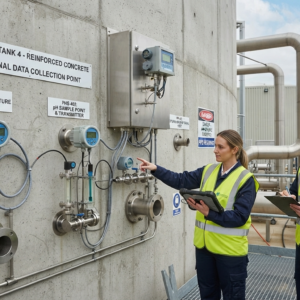
| Monitoring | Pressure, temperature, pH, loading and maintenance monitoring as specified |
| Final Specification | Issued only after inspection, measurement and feasibility review |
What the Conversion Package Can Include
Upgrade the Converted System for Better Performance
Depending on the expected gas production, distance to gas-use points, feedstock quality and operational goals, the converted system can be expanded with additional treatment, storage, monitoring and distribution equipment.
Reduces corrosive hydrogen sulphide from the raw biogas stream.
Helps remove condensate that may obstruct gas flow or damage equipment.
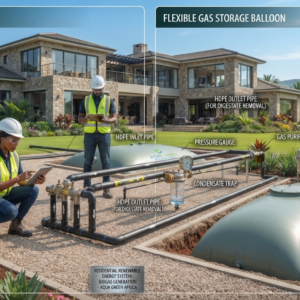
Provides temporary gas storage and helps balance production with demand.
Supports more stable gas delivery to approved appliances.
Allows biogas distribution to more than one suitable kitchen or appliance point.
Provides durable gas distribution for longer or more demanding pipeline routes.
Supports safer collection and controlled use of digested slurry.
Improves the preparation of kitchen waste, manure or mixed organic feedstock.
Can include pressure gauges, temperature sleeves, pH sampling and inspection points.
A new digester may be integrated where the existing tank alone is too small.
Includes suitable burners, isolation valves and connection accessories.
Scheduled inspection, troubleshooting and long-term system support.
What Happens After the Site Assessment
The assessment does not automatically result in a conversion. Dominion recommends the most appropriate option based on safety, technical feasibility and project value.
Full Conversion Approved
The tank has suitable dimensions and structural potential to become the main biodigester after the specified modifications.
Conversion With Reinforcement
Conversion is feasible, but structural repairs, sealing, strengthening or hydraulic modifications are required.
Integration Recommended
The existing tank can remain part of the sanitation system but should be connected to a separate new biodigester or treatment chamber.
Replacement Recommended
Where the tank is unsafe, undersized, badly located or too expensive to modify, a new engineered biodigester is recommended.
Septic Conversion Requires More Than Sealing a Tank
A septic tank was not originally designed as a controlled biogas-production system. Successful conversion requires careful attention to structure, hydraulic flow, pressure, gas-tightness, feedstock loading, digestate displacement and user safety.
Dominion approaches every project as an engineering retrofit, not as an improvised alteration.
Every recommendation is based on the actual tank and property conditions.
The conversion plan addresses structural, hydraulic and gas-system requirements.
Assessment, design, construction, installation, testing and training can be delivered as one project.
Gas isolation, pressure control, moisture management and testing are incorporated.
Where conversion is unsuitable, Dominion recommends a safer alternative.
Safety and Sanitation Notice
Septic tanks may contain toxic gases, infectious materials, unstable internal structures and oxygen-deficient atmospheres. They must never be entered, emptied, opened or modified by untrained persons.
Inspection, cleaning, confined-space access, gas testing and construction work must be conducted with appropriate professional controls, protective equipment and site-specific safety procedures.
Septic Tank Conversion Questions
Can every septic tank be converted into a biodigester?
No. Suitability depends on structural condition, dimensions, existing pipework, tank location, feedstock availability, required retention time, sealing potential and the cost of modification.
How do you determine whether the tank is suitable?
Dominion conducts a site inspection, takes measurements, evaluates structural and hydraulic conditions, reviews the available organic waste and estimates the expected biogas demand and production.
Must the septic tank be emptied before assessment?
Initial assessment may begin without complete emptying. However, internal structural inspection, cleaning, repairs and modification generally require controlled emptying and safe access procedures.
Can the toilets remain connected after conversion?
They may remain connected where the final system is designed for the expected wastewater loading, retention time and sanitation requirements.
Can kitchen waste and animal manure also be added?
Yes, where the feedstock composition, inlet arrangement, mixing process, loading rate and tank capacity are designed to receive them.
Will the existing tank need reinforcement?
Some tanks require crack repair, plastering, roof strengthening, wall reinforcement, waterproofing or internal gas-tight sealing. The exact requirement is determined during assessment.
Is excavation always necessary?
Not always. Excavation may still be required to expose walls, correct pipe levels, create access, install an outlet chamber or add auxiliary equipment.
How much biogas will the converted tank produce?
Production depends on the quantity and type of feedstock, system temperature, hydraulic-retention time, operating consistency and the usable digester volume.
Can the converted system supply more than one kitchen?
Yes, provided gas production, storage, pressure regulation, pipe sizing and appliance demand are properly evaluated.
Can a gas-storage balloon be added?
Yes. A suitable storage balloon can help balance variable gas production and gas demand.
How long does the conversion process take?
The project duration depends on tank condition, cleaning requirements, structural repairs, curing time, pipe modifications, auxiliary construction and equipment installation.
Why is there no fixed price on the product page?
Every existing septic tank differs in size, material, structural condition, accessibility and required modifications. A quotation is issued after the project scope has been assessed.
What happens if conversion is not technically suitable?
Dominion can recommend a separate fixed-dome, HDPE or institutional biodigester and determine whether the existing septic tank should remain in service, be modified for another function or be replaced.
Avis
Il n’y a pas encore d’avis.