
Modern Biodigester Technology
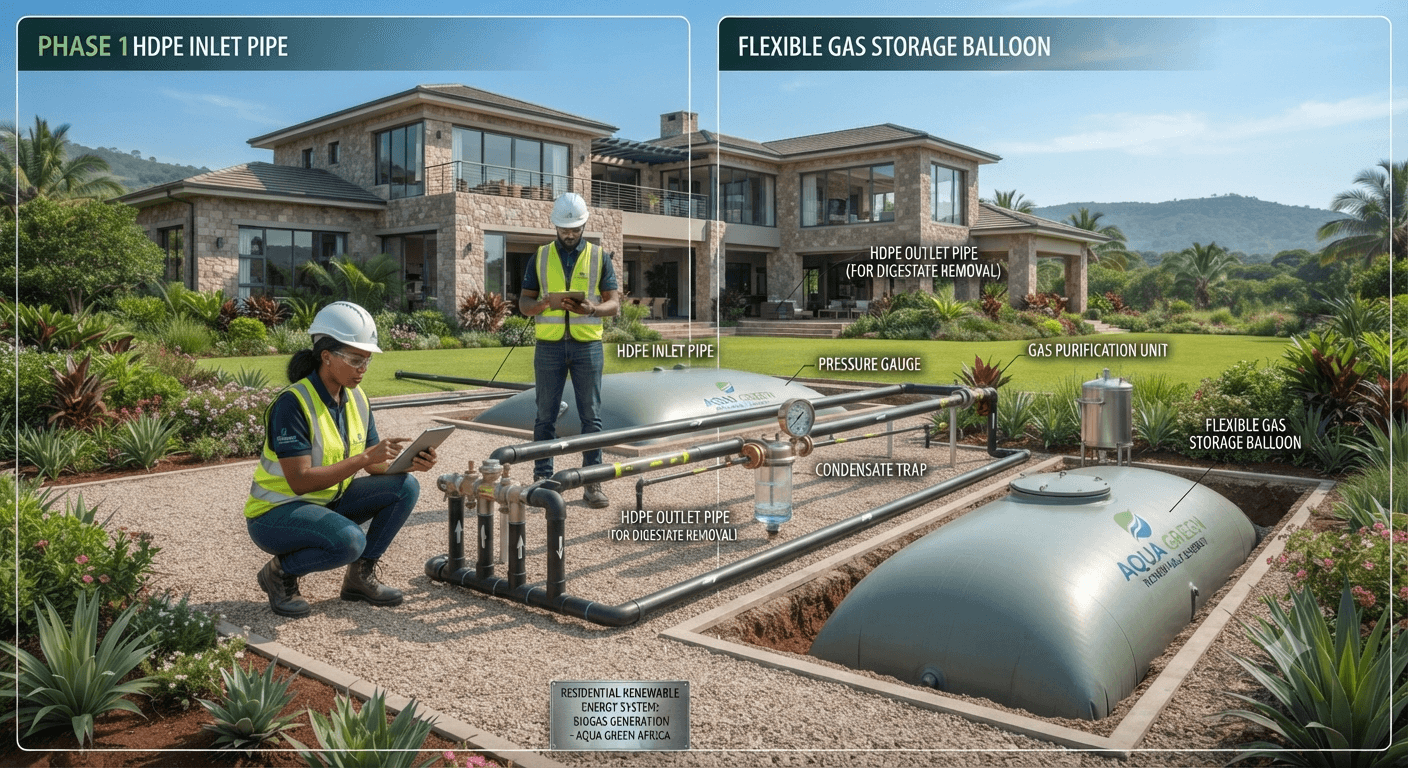
High-Density Polyethylene (HDPE) biodigesters represent one of the most advanced technologies for anaerobic digestion. Their corrosion resistance, lightweight construction, factory-controlled manufacturing and rapid installation make them suitable for a wide range of residential, commercial, institutional and agricultural applications.
Each Dominion HDPE Biodigester is engineered according to the client’s waste generation, energy demand, hydraulic retention time and available installation space to ensure reliable long-term performance.
Why Clients Choose HDPE Biodigesters
Factory-manufactured units reduce construction time significantly.
HDPE is highly resistant to corrosion and aggressive wastewater environments.
Lightweight construction simplifies logistics and installation.
Smooth internal surfaces reduce sediment build-up and simplify maintenance.
Produces clean biogas while improving waste management.
Supports sustainable waste treatment and greenhouse gas reduction.
Additional storage, purification and distribution systems can be integrated.
Each installation is customised to meet project-specific requirements.
Suitable For
Typical Capacity Options
| Capacity | Recommended Application |
|---|---|
| 2–4 m³ | Small households |
| 6–10 m³ | Large homes and restaurants |
| 15–20 m³ | Hotels, schools and farms |
| 30–50+ m³ | Commercial and institutional projects |
Designed Around Your Waste, Energy Demand and Site Conditions
Final specifications are determined after site assessment and engineering calculations. The table below presents the principal design elements considered for a Dominion HDPE Biodigester System.
| Digester Material | High-Density Polyethylene selected for wastewater and anaerobic digestion applications |
| Nominal Capacity | 2 m³ to 50 m³ and larger custom-engineered configurations |
| Installation Position | Underground, partially buried or above-ground where technically appropriate |
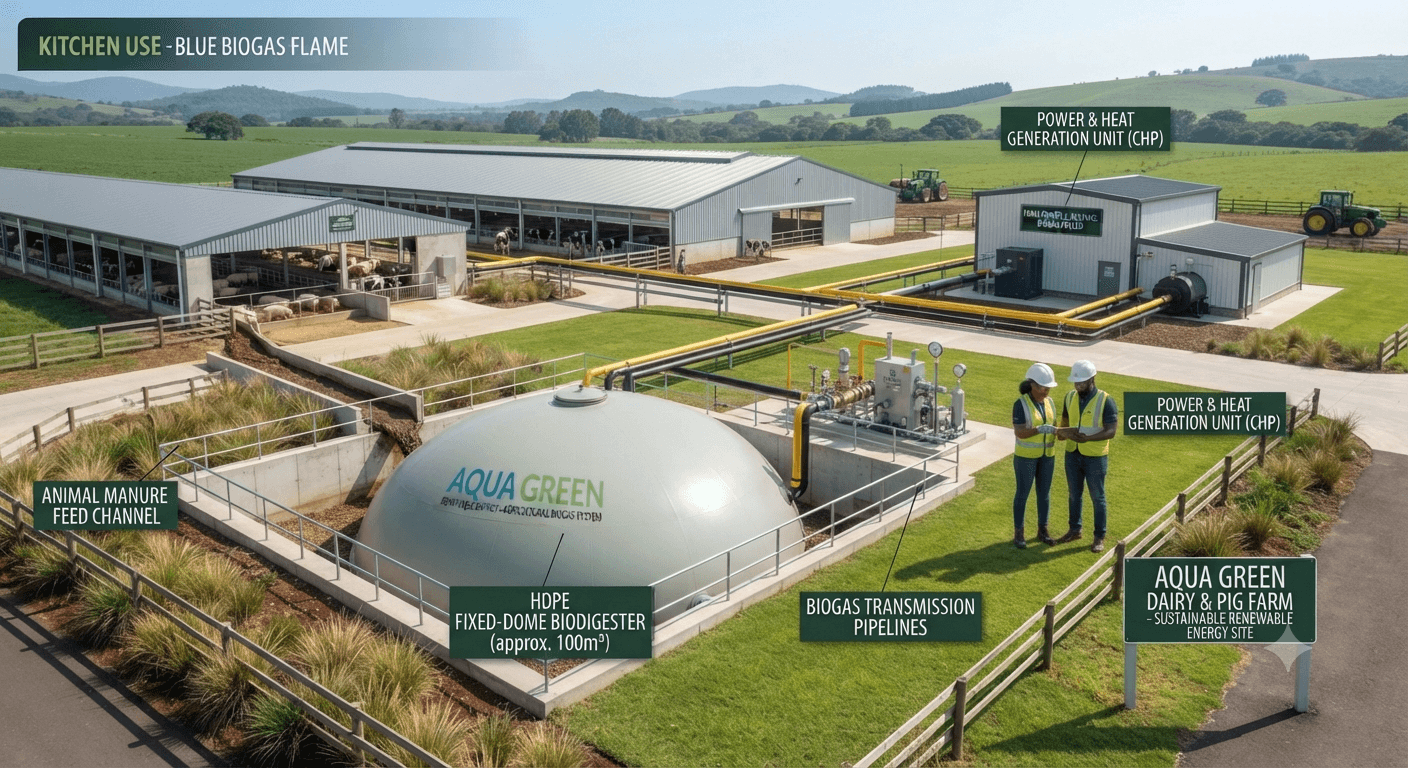
| Feedstock Options | Animal manure, kitchen waste, human waste and approved mixed organic feedstock |
| Hydraulic Retention Time | Calculated according to feedstock characteristics, temperature, loading and treatment objective |
| Daily Feeding Rate | Determined from digester working volume and selected retention time |
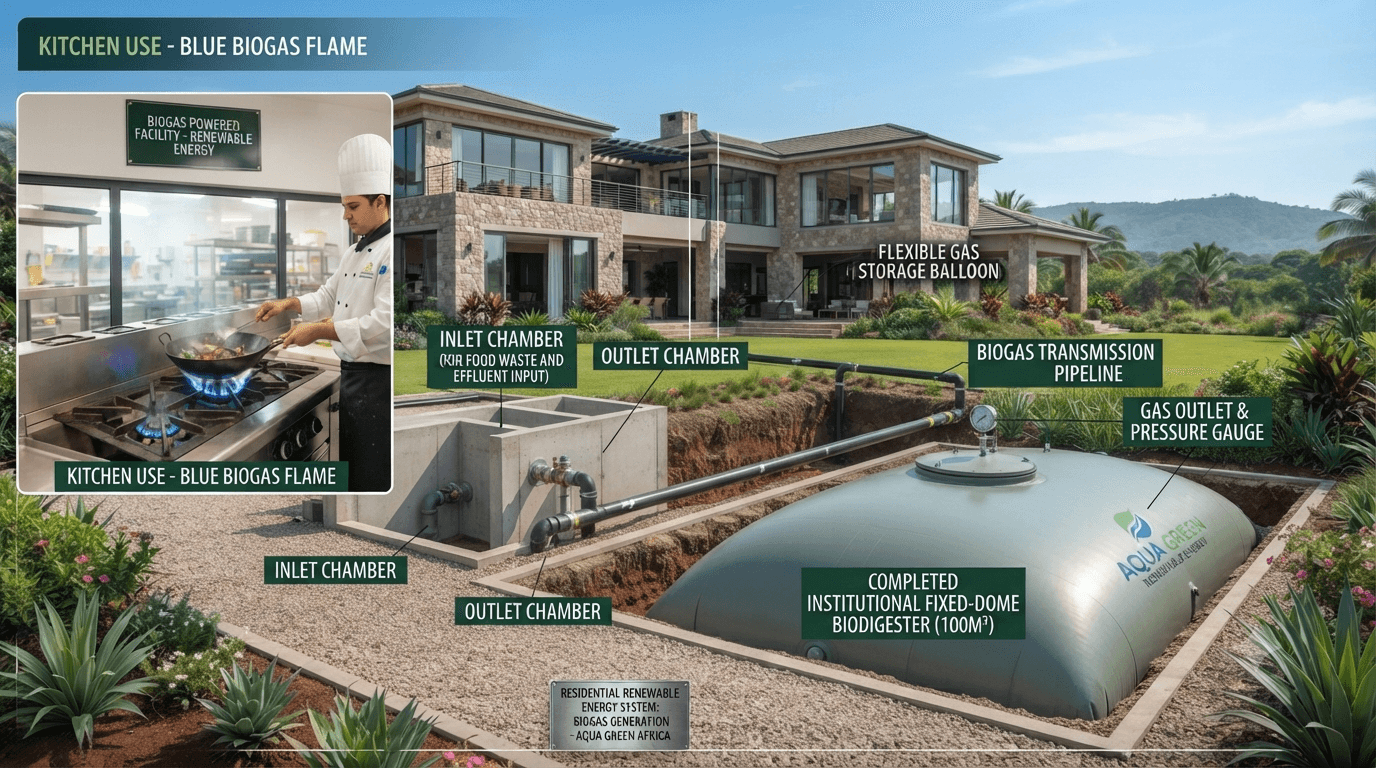
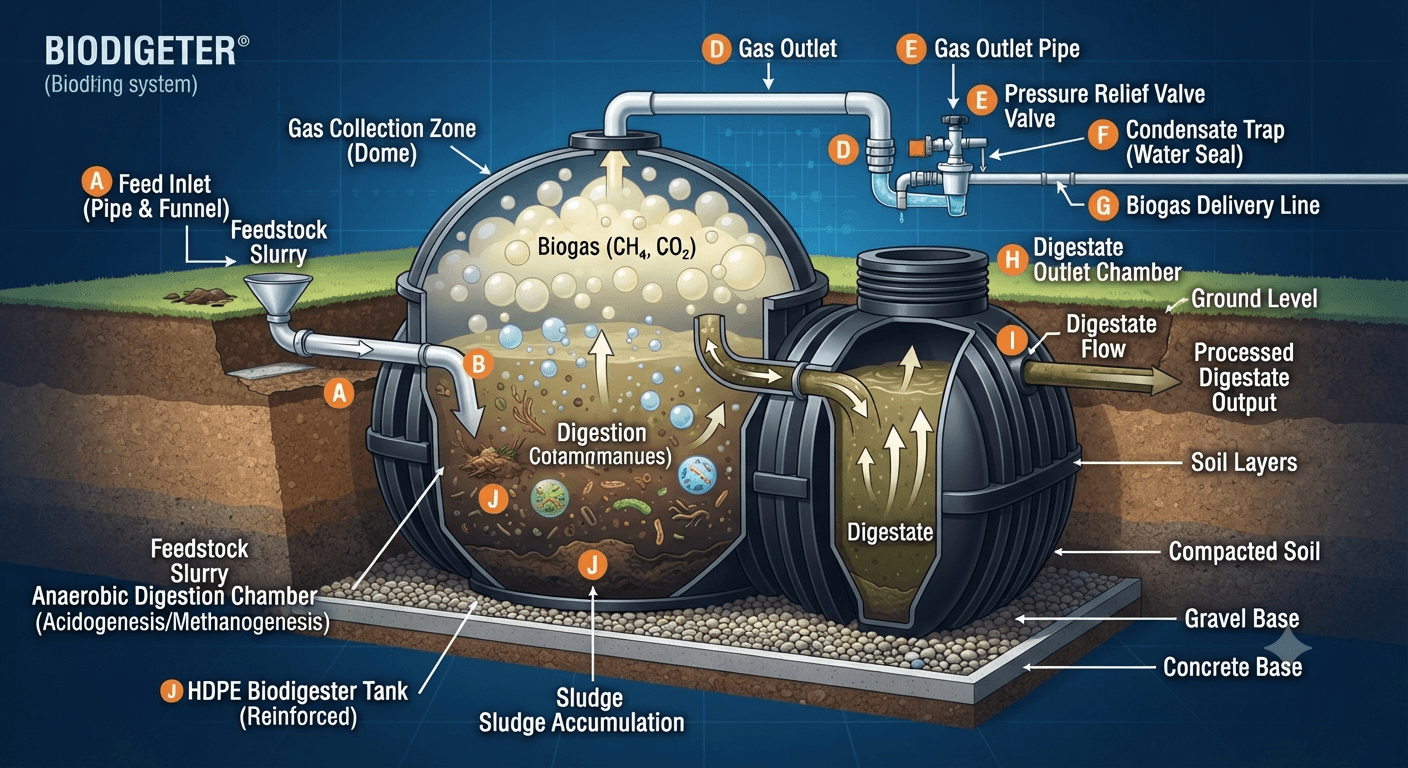
| Inlet System | Feed preparation chamber, inlet pipe and optional mixing or pre-treatment system |
| Outlet System | Digestate outlet, displacement chamber or controlled overflow arrangement |
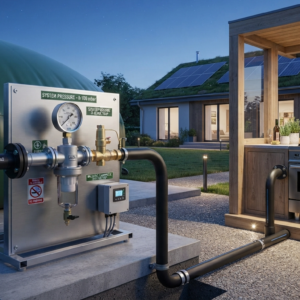
| Gas Outlet | Gas-tight outlet connection with isolation valve and approved accessories |
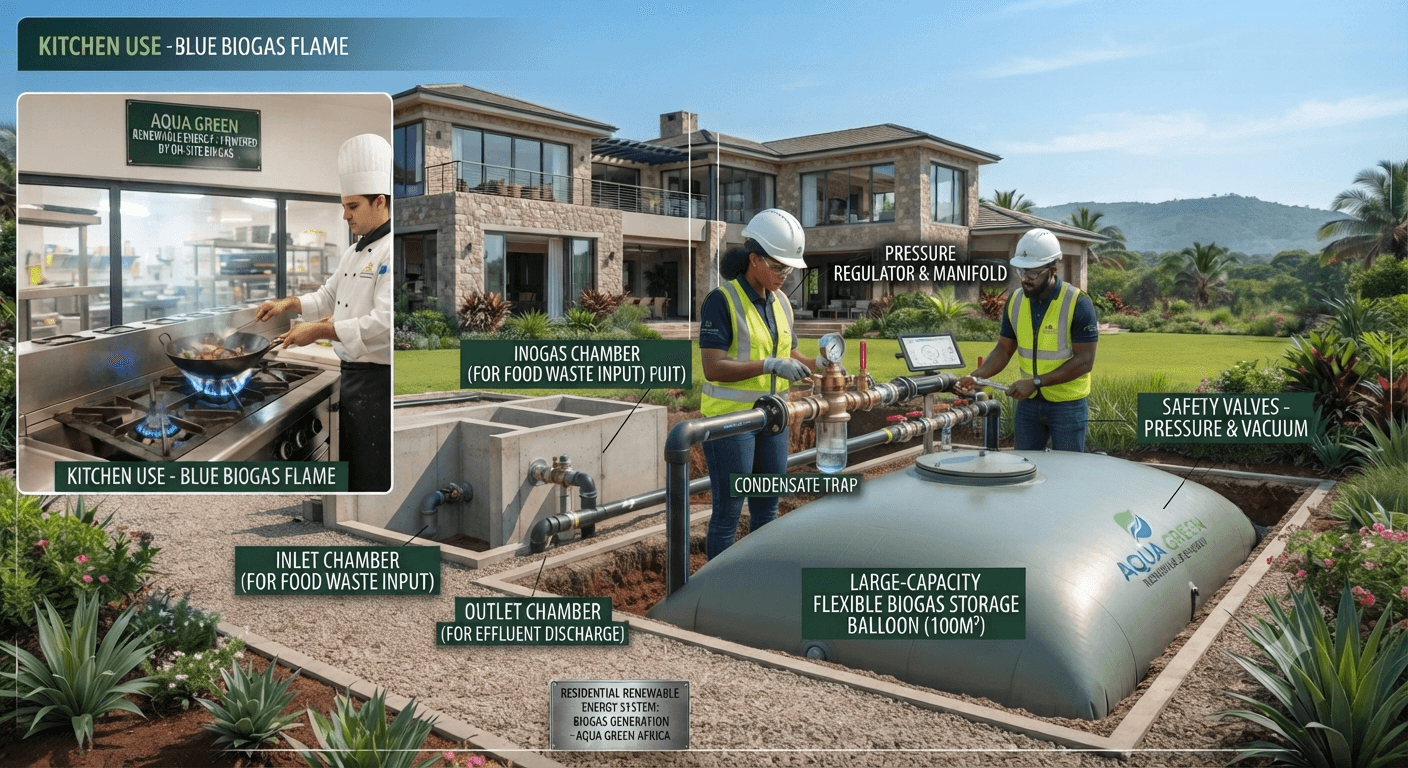
| Gas Pressure Management | Pressure-relief arrangement, regulation and storage integration where required |
| Gas Treatment | Condensate management, hydrogen-sulphide filtration and optional carbon-dioxide reduction |
| Gas Distribution | HDPE, PPR or other approved gas pipeline selected according to route and pressure requirements |
| Foundation and Bedding | Compacted base, sand bedding, concrete foundation or engineered support according to site conditions |
| Backfilling | Controlled selected material placed and compacted to protect the digester |
| Inspection Access | Access ports, inspection points or maintenance openings according to system design |
| Testing | Leak testing, hydraulic testing, gas-system testing and commissioning verification |
| Final Configuration | Issued after assessment, calculations, equipment selection and client approval |
Professional Delivery From Assessment to Commissioning
Every HDPE biodigester project follows a controlled technical workflow designed to protect the equipment and ensure reliable operation.
Consultation
Project objectives, waste streams, available land and energy needs are reviewed.
Évaluation du site
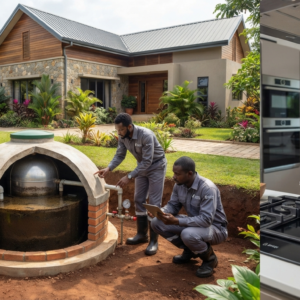
Ground conditions, drainage, access, pipe routing and installation space are inspected.
Feedstock Study
Daily waste quantities, solids content and expected gas potential are evaluated.
System Design
Capacity, retention time, inlet, outlet, gas line and accessories are specified.
Site Preparation
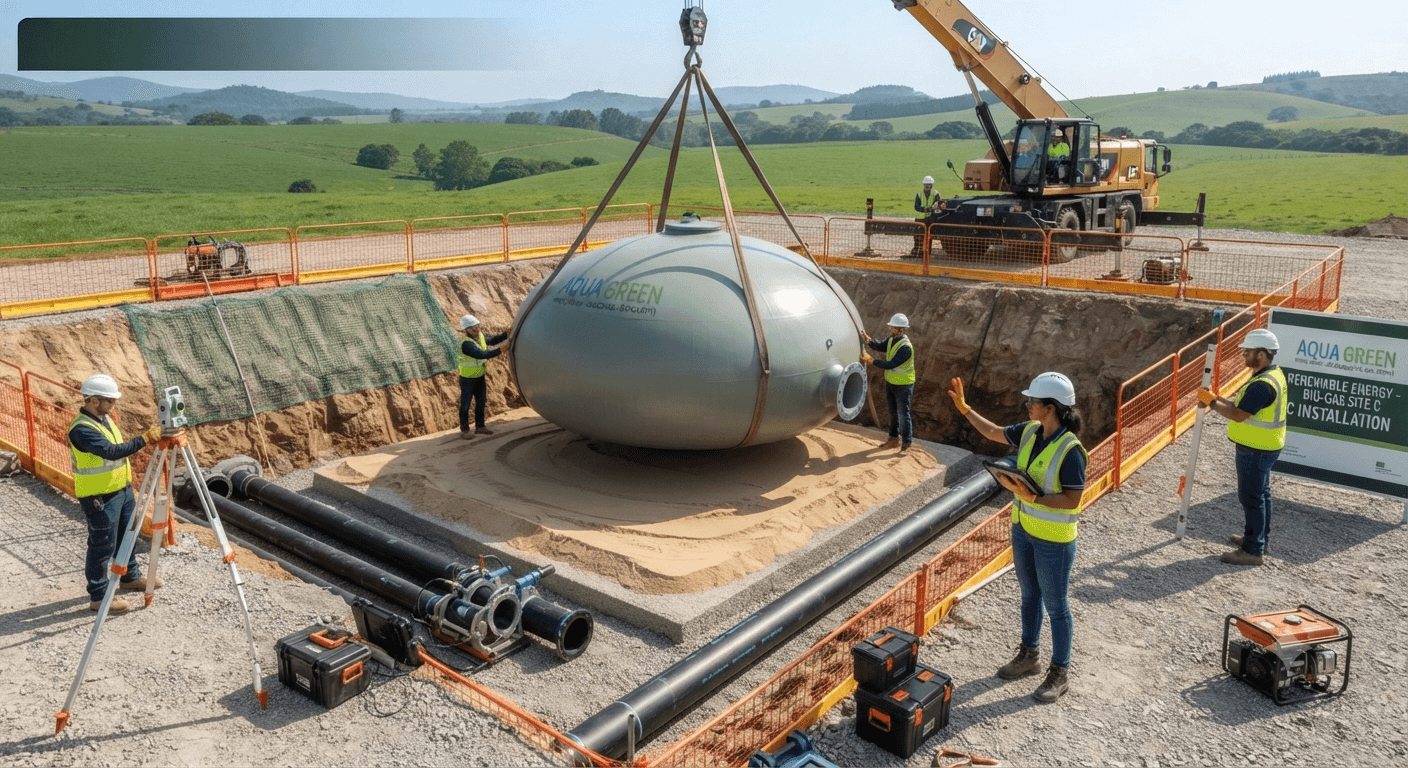
Excavation, foundation preparation, drainage and safe access are completed.
Digester Placement
The HDPE unit is carefully positioned, levelled, supported and protected.
Connections
Inlet, outlet, gas outlet, valves, piping and safety devices are installed.
Testing
The system is checked for leaks, correct flow, structural support and gas readiness.
Commissioning
The system is activated, monitored and handed over with operating guidance.
What the HDPE Biodigester Package Can Include
Expand the System as Your Needs Grow
Stores excess gas and balances production with consumption.
Reduces corrosive and odorous hydrogen sulphide.
Protects pipelines and appliances from condensate accumulation.
Supports more stable gas delivery to appliances.
Improves the preparation of food waste and mixed organic materials.
Allows one system to supply several suitable appliances or buildings.
Includes suitable burners, valves and connection accessories.
Available where gas volume and quality support a suitable generator.
Can include pressure, temperature, pH and gas-flow monitoring.
Supports collection, storage and controlled agricultural use.
Additional HDPE units can be integrated to increase total capacity.
Provides scheduled inspection and professional system support.
HDPE vs Fixed-Dome Biodigesters
Both technologies are excellent when properly designed. The best choice depends on project objectives, budget, available land, construction conditions and long-term operational requirements.
| Feature | HDPE Biodigester | Fixed Dome Biodigester |
|---|---|---|
| Installation Speed | Very Fast | Longer Civil Construction |
| Corrosion Resistance | Excellent | Depends on construction quality |
| Weight | Lightweight | Heavy reinforced structure |
| Construction Time | Days | Several weeks |
| Maintenance | Low | Low when properly constructed |
| Expansion | Easy Modular Expansion | Requires New Civil Works |
Engineering Before Installation
An HDPE biodigester is only as good as the engineering behind it. Proper sizing, hydraulic calculations, feedstock analysis, gas demand estimation, installation quality and commissioning determine long-term performance.
Our projects are designed by trained engineers to maximise safety, durability, gas production and operational reliability.
Important Safety Notice
Installation of an HDPE biodigester requires correct excavation, structural support, backfilling, pipe routing, pressure management and gas testing. Improper installation may reduce system performance or damage the equipment.
All installations should be carried out by qualified personnel following approved engineering procedures.
Questions Clients Frequently Ask
How long does an HDPE biodigester last?
When professionally installed, operated and maintained, an HDPE biodigester can provide reliable service for many years. Actual service life depends on installation quality, operating conditions and maintenance.
Can it be installed above ground?
Yes. Depending on engineering requirements and site conditions, HDPE biodigesters may be installed underground, partially buried or above ground.
Can it receive kitchen waste?
Yes. Kitchen waste, animal manure and other approved biodegradable organic materials may be used where the system is designed for those feedstocks.
Can it power commercial kitchens?
Yes. Commercial applications are possible where the biodigester capacity, gas production and distribution system are engineered to meet the required demand.
Can the system be expanded later?
Yes. Additional HDPE digesters, gas storage, purification systems and distribution networks can be integrated as project requirements grow.
Do I need gas purification?
That depends on the intended application. Cooking systems often require moisture control and hydrogen sulphide reduction, while higher-value applications may require additional gas upgrading.
Can electricity be generated?
Yes, provided the biodigester produces sufficient gas volume and quality for an appropriately selected generator system.
Is maintenance difficult?
Routine maintenance is generally straightforward and includes monitoring, periodic inspection and servicing of valves, pipelines and gas-treatment equipment.
Can I install it myself?
Professional installation is strongly recommended. Proper excavation, bedding, connections, pressure management, testing and commissioning are essential for safe and reliable operation.
Why is there no fixed price?
Every project differs in capacity, feedstock, excavation requirements, accessories, gas demand and installation conditions. A quotation is prepared after technical assessment.
Avis
Il n’y a pas encore d’avis.