
Controlled Pressure for Reliable Biogas Use
Biogas systems operate at relatively low pressure, but the pressure can still fluctuate as production, storage volume and gas demand change. Without proper regulation, appliances may experience unstable flames, weak performance or excessive pressure.
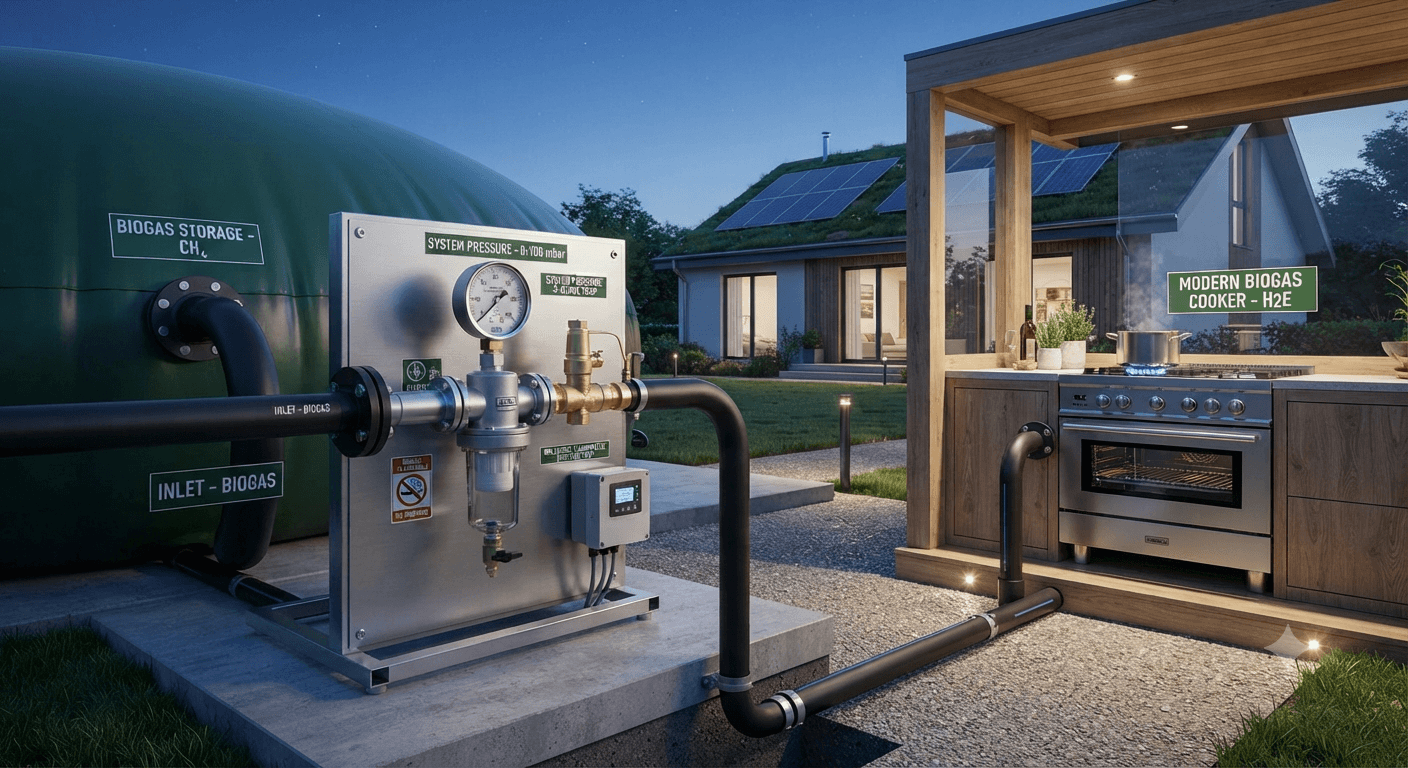
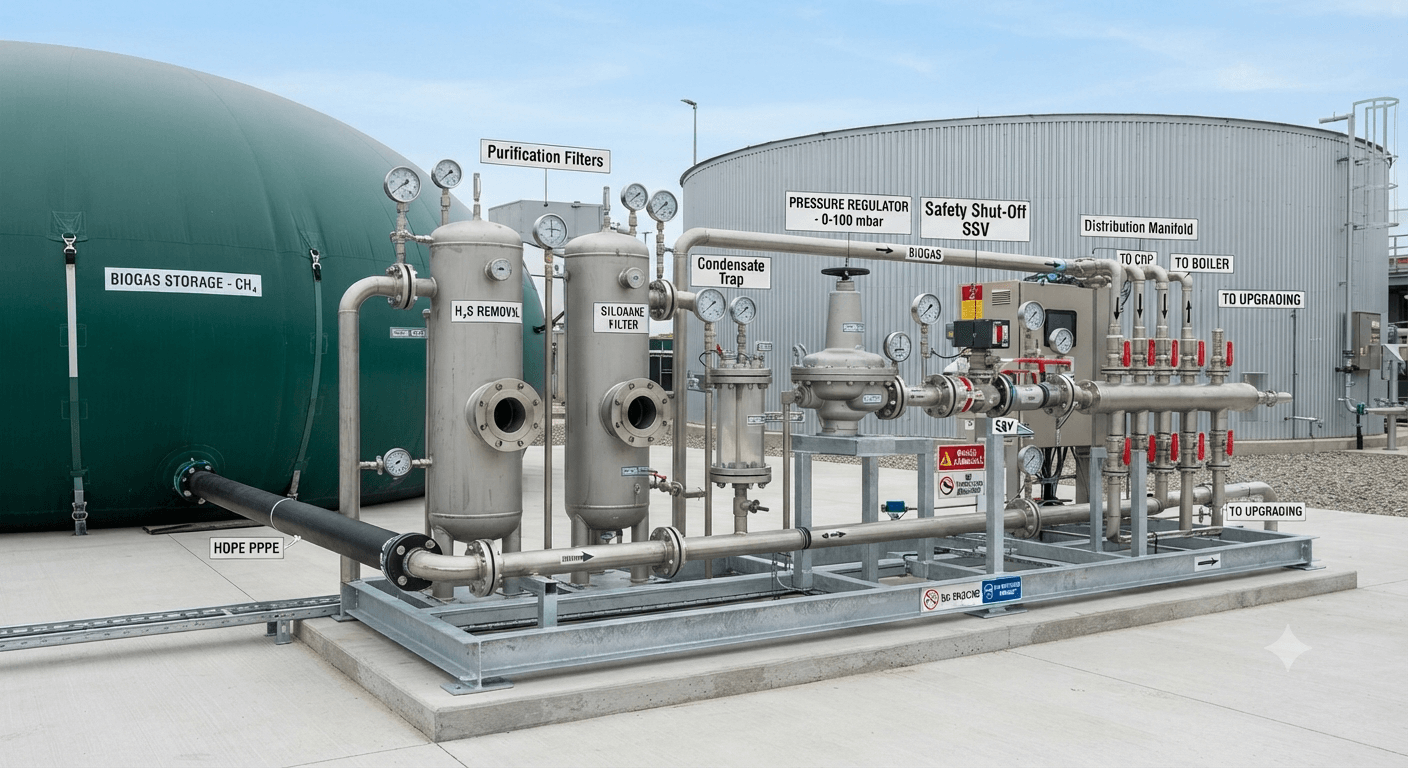
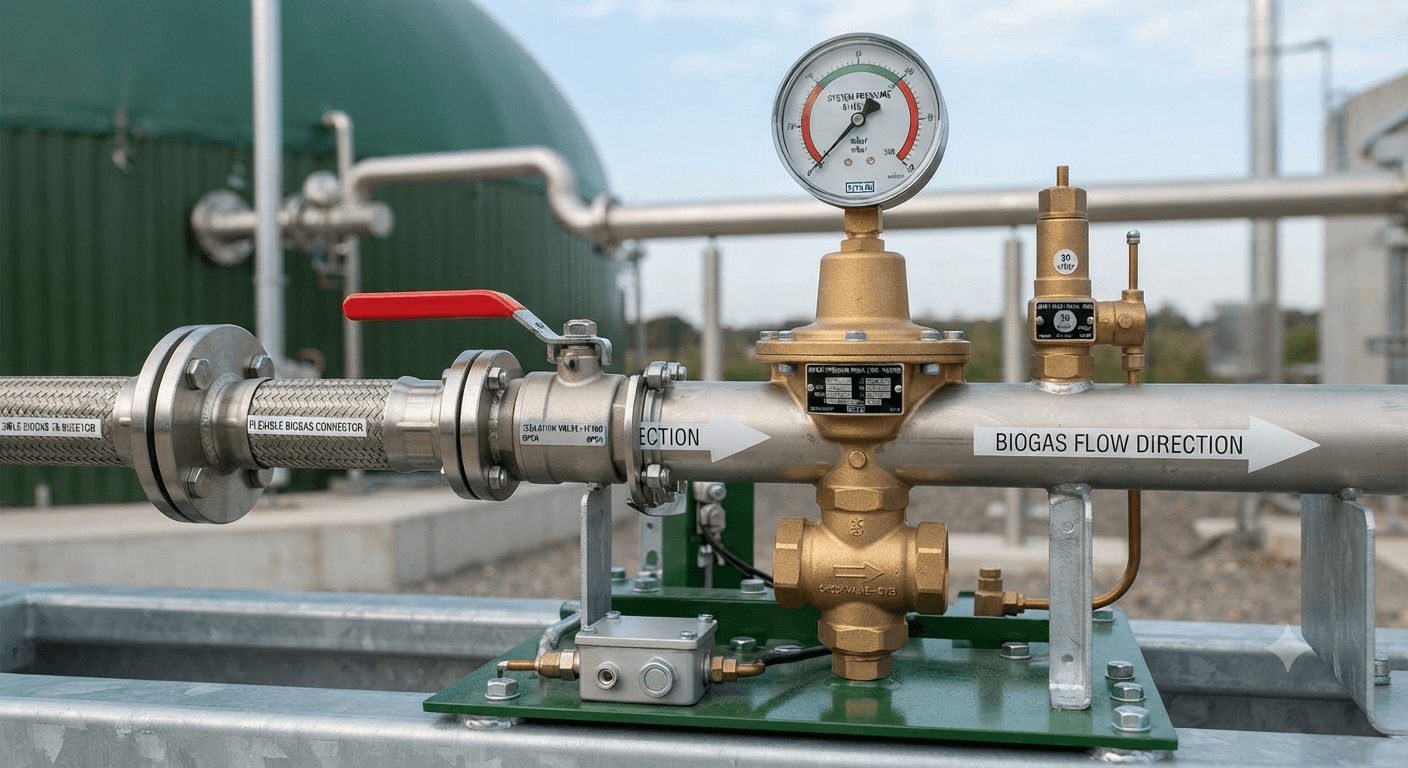
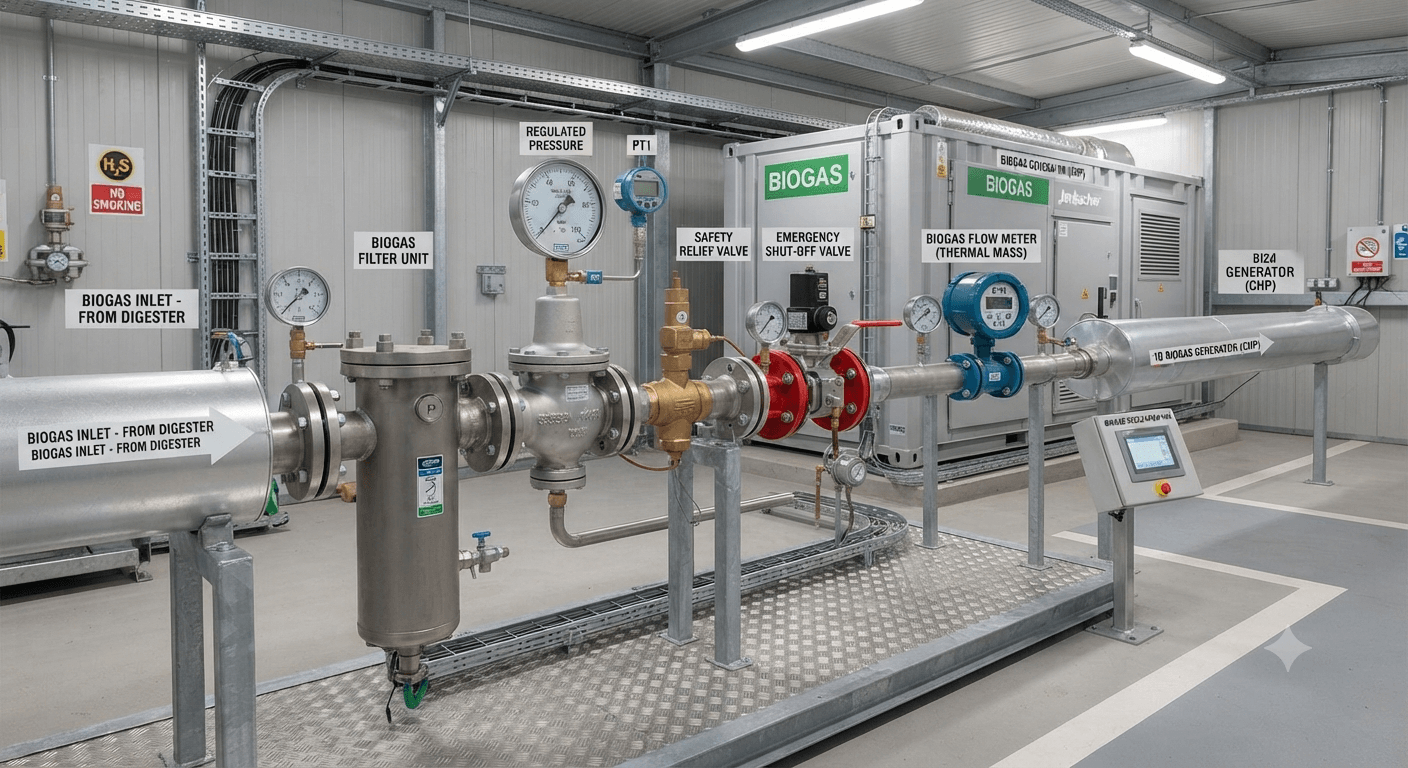
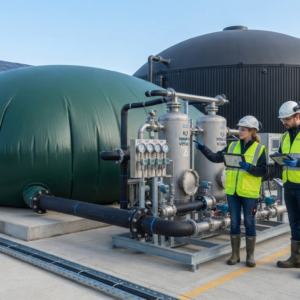
Dominion Biogas Services designs pressure regulation assemblies according to gas flow rate, storage pressure, pipe length, appliance demand and safety requirements. Systems may be supplied as compact residential regulator units or as complete commercial gas trains with gauges, bypass lines, relief valves, flow meters and shut-off controls.
Protect Equipment and Improve Gas Performance
Delivers a more consistent pressure to appliances and burners.
Reduces the risk of pressure-related damage to cookers, burners and engines.
Supports cleaner, steadier and more controllable combustion.
Provides pressure relief, shut-off and monitoring functions.
Helps manage pressure across longer pipe runs and multiple outlets.
Gauges and flow indicators make operation easier to inspect.
From Compact Regulators to Complete Gas Trains
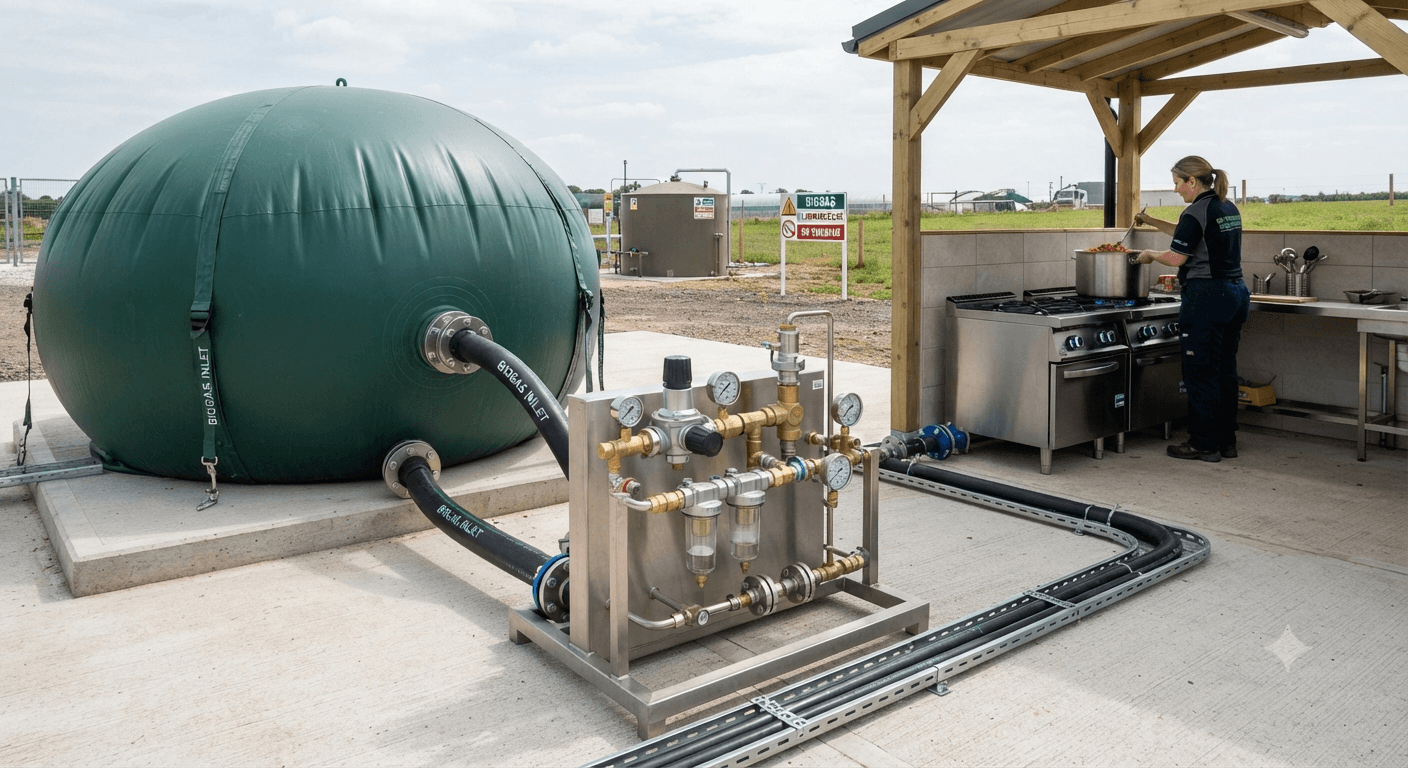
Residential Regulation Unit
For small household cooking systems.
Commercial Pressure-Control Package
For restaurants, hotels, schools and hospitals.
Institutional Gas Train
For larger or more demanding applications.
What the Package Can Include
Suitable for Multiple Biogas End Uses
Selected According to Flow, Pressure and End Use
| Gas Service | Low-pressure biogas distribution |
| Flow Capacity | Custom-sized according to appliance and network demand |
| Inlet Pressure | Determined from digester or storage conditions |
| Outlet Pressure | Set according to the connected appliance or equipment |
| Regulation Stages | Single-stage or multi-stage configuration |
| Construction Material | Biogas-compatible regulator bodies, valves, fittings and pipework |
| Instrumentation | Pressure gauges, flow meters, sampling points and optional gas sensors |
| Installation Format | Wall-mounted, panel-mounted or skid-mounted |
| Final Specification | Issued after flow, pressure, pipework and appliance assessment |
From Pressure Assessment to Commissioning
System Review
The digester, storage and gas-use equipment are assessed.
Pressure and Flow Analysis
Required inlet, outlet and peak flow conditions are established.
System Design
Regulators, gauges, valves and safety controls are selected.
Assembly
The pressure-control unit is fabricated and prepared.
Installation and Testing
The assembly is connected, leak-tested and adjusted.
Commissioning
Pressure settings are verified and users receive guidance.
Build a Complete Biogas Control System
Pressure Regulation Designed for the Entire Gas Network
A regulator should not be selected independently of the storage system, pipework and appliances. Correct pressure control depends on flow rate, pressure losses, operating demand and safety requirements.
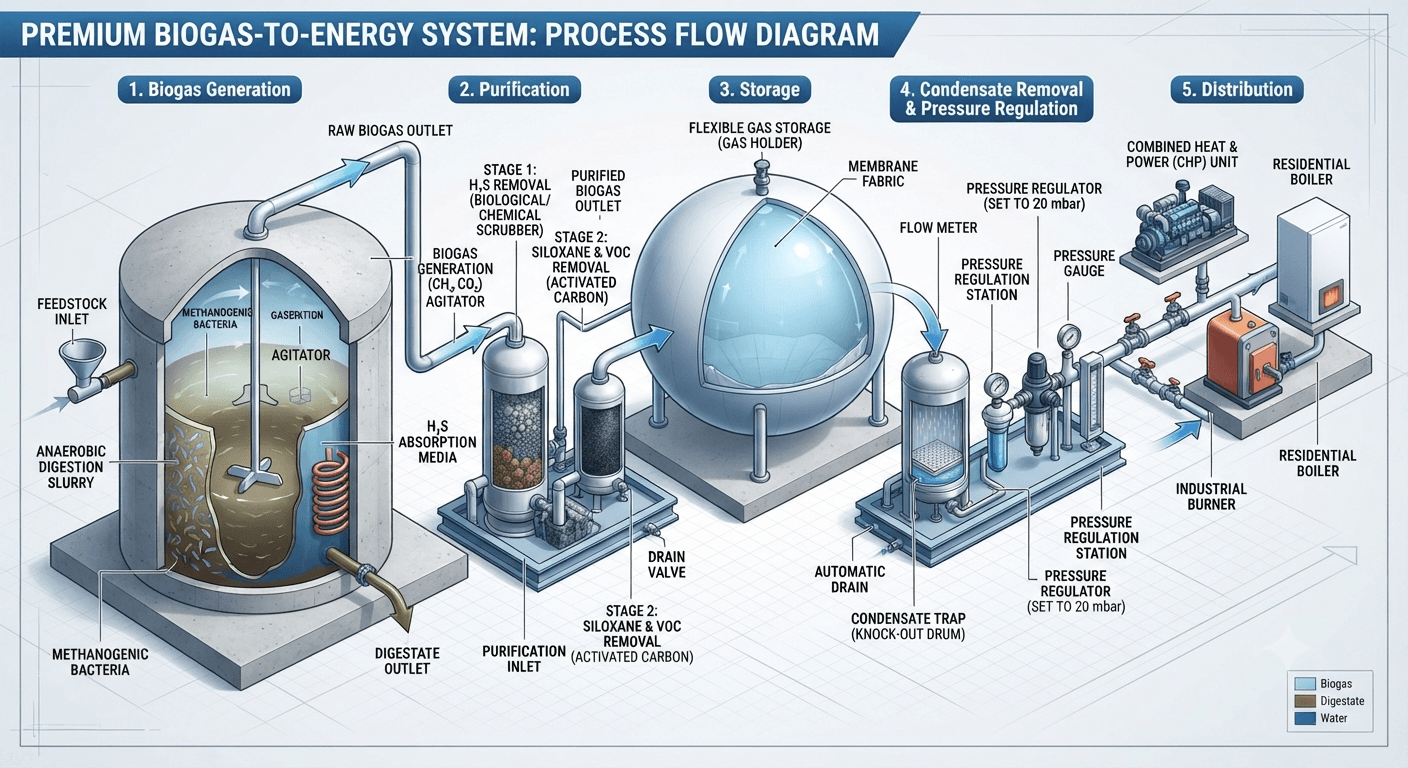
Dominion Biogas Services integrates pressure regulation with purification, storage, condensate control, distribution piping and end-use equipment to deliver a practical and dependable biogas system.
✓ Professional Engineering
Regulators are selected from real flow and pressure conditions.
✓ Complete Integration
The pressure unit is coordinated with the entire gas train.
✓ Safety-Focused Design
Relief, isolation and emergency controls are incorporated.
✓ Testing and Adjustment
Pressure settings are verified before handover.
✓ Long-Term Support
Maintenance and system-upgrade services are available.
Important Safety Notice
Biogas is flammable and may contain toxic hydrogen sulphide. Pressure regulators, gauges, relief valves and shut-off devices must be compatible with biogas and installed in ventilated locations away from ignition sources. The system should be leak-tested and commissioned by qualified personnel.
Questions Clients Frequently Ask
Why does a biogas system need a pressure regulator?
A regulator reduces pressure fluctuations and delivers gas to appliances at a more suitable and consistent pressure.
Can one regulator supply several appliances?
Yes, provided the regulator and pipeline are sized for the combined peak gas demand.
Can an LPG regulator be used for biogas?
A regulator should only be used when its materials, pressure range and flow capacity are confirmed to be suitable for the biogas system.
Where should the regulator be installed?
It is normally installed downstream of gas storage and purification, before the final distribution network or appliance manifold.
What happens if gas pressure is too low?
Low pressure may cause weak flames, unstable appliance operation or inability to meet peak gas demand.
What happens if gas pressure is too high?
Excessive pressure can create unstable flames, leakage risk and possible damage to appliances or fittings.
Does the regulator require maintenance?
Yes. Gauges, valves, regulator diaphragms, filters and connections should be inspected periodically.
Why is there no fixed price?
Price depends on flow rate, pressure range, number of regulation stages, instrumentation, safety controls, pipework and installation requirements.
Avis
Il n’y a pas encore d’avis.