
Institutional Capacity
Designed for large and continuous waste streams.
Énergies renouvelables
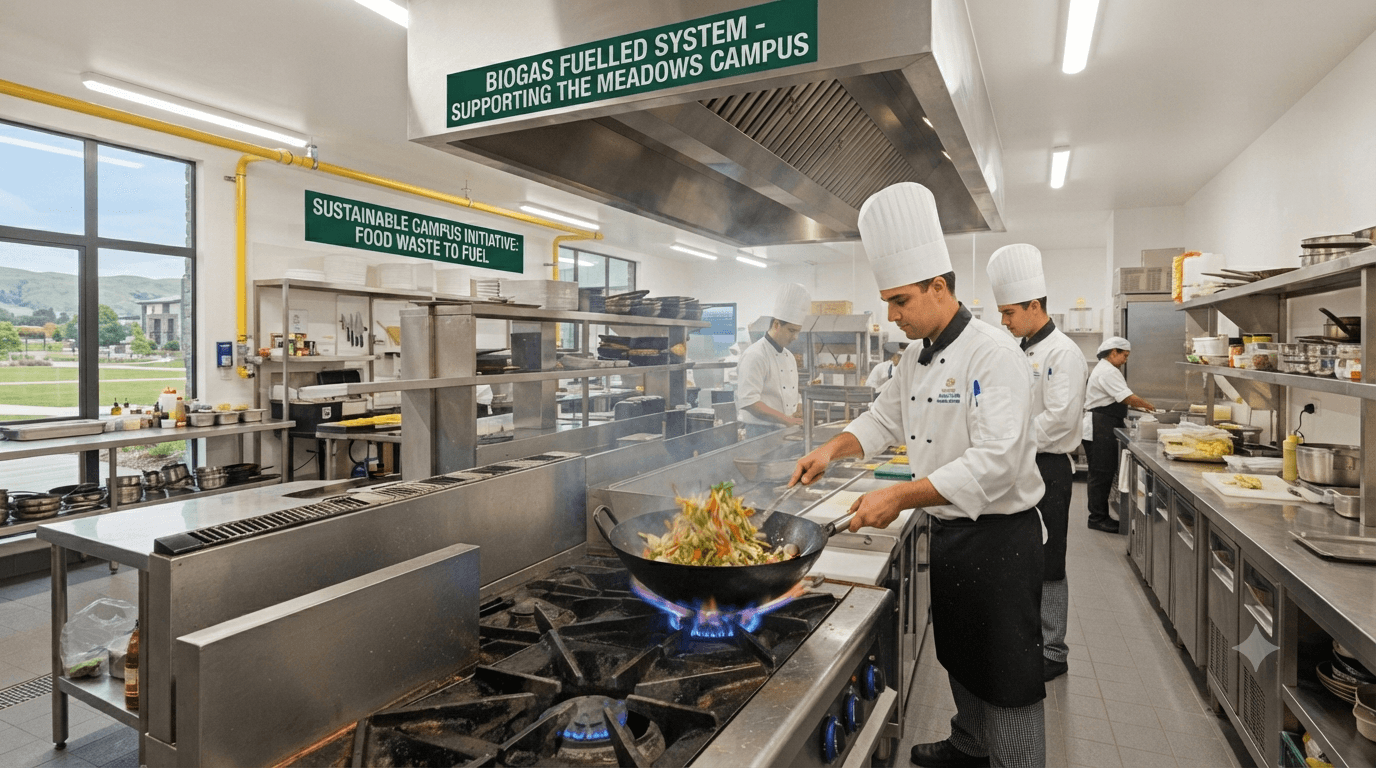
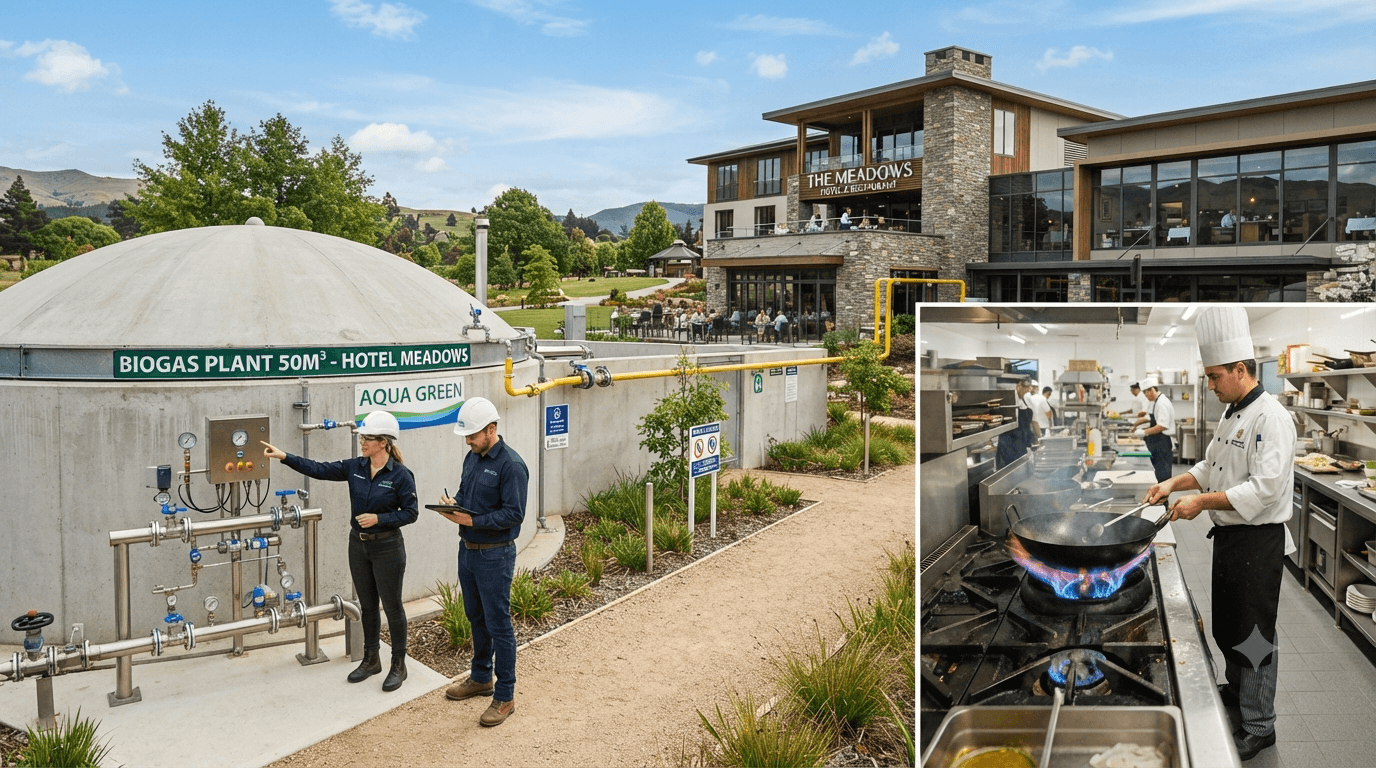
Gas for institutional cooking and selected heating uses.
Waste Management
Structured handling of organic and sanitation waste.
Operational Training
Staff trained for safe feeding and maintenance.
Sustainable Infrastructure for High-Occupancy Institutions
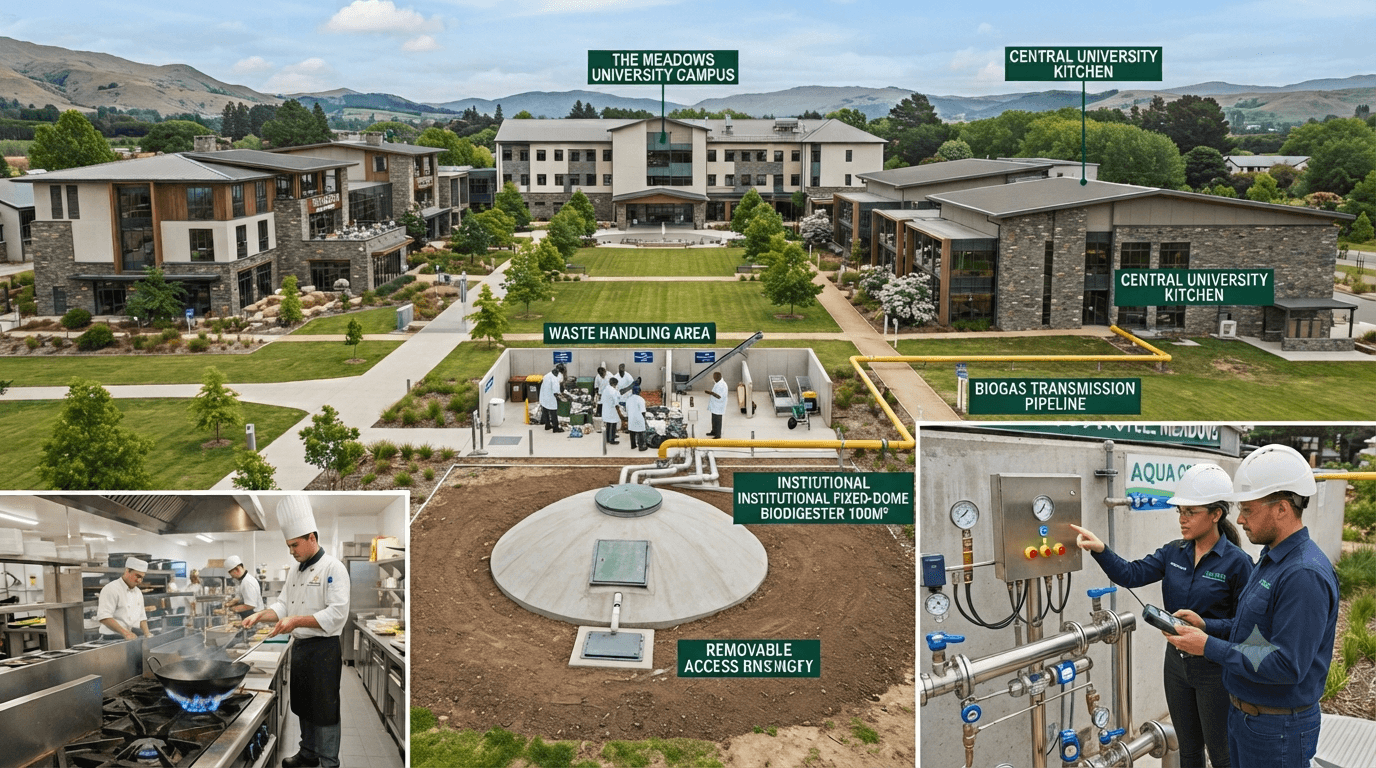
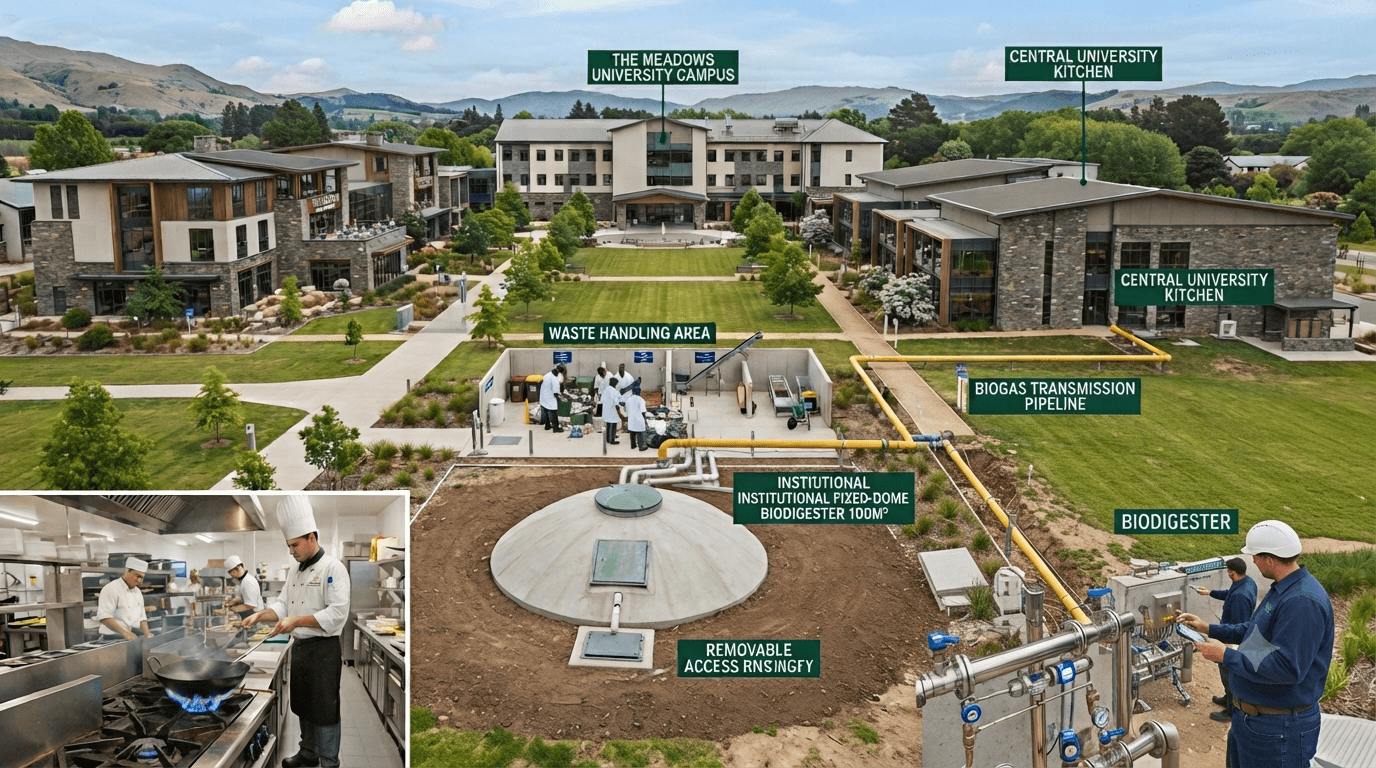
Dominion Institutional Biodigester Systems are designed for organisations that generate substantial and predictable organic waste from kitchens, farms, residences, sanitation facilities and food-service operations.
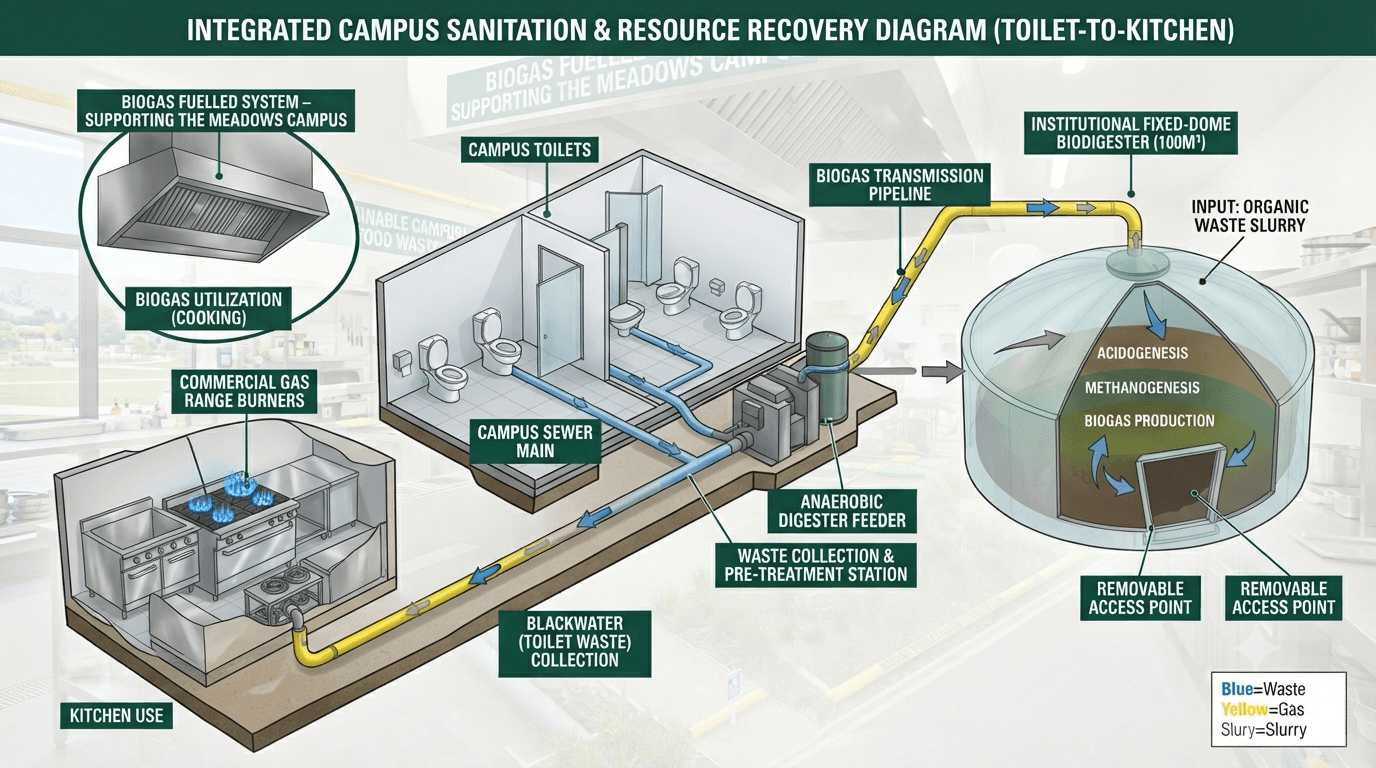
The system can integrate waste treatment, renewable-energy generation, sanitation improvement and digestate recovery within one coordinated institutional project.
Built for Campuses, Public Facilities and Large Communities
Écoles
Boarding facilities, kitchens, toilets and institutional farms.
Universities
Campuses, hostels, cafeterias and research farms.
Hôpitaux
Kitchen waste, staff residences and approved sanitation streams.
Religious Institutions
Retreat centres, seminaries, convents and large ministry campuses.
Government Facilities
Public establishments, administrative campuses and service centres.
Military Facilities
Barracks, kitchens, sanitation facilities and operational compounds.
Prisons & Correctional Centres
Large kitchens, sanitation systems and controlled institutional farms.
Residential Campuses
Worker camps, hostels and multi-building developments.
Strengthen Energy Resilience and Institutional Sanitation
Designed Around Population, Waste and Energy Demand
| Typical Application | Schools, universities, hospitals, campuses, prisons, religious and public institutions |
| Capacity Range | Custom engineered, typically from 30 m³ upward |
| Construction | Reinforced-concrete or engineered masonry fixed-dome system |
| Feedstock | Kitchen waste, manure, toilet waste and approved biodegradable materials |
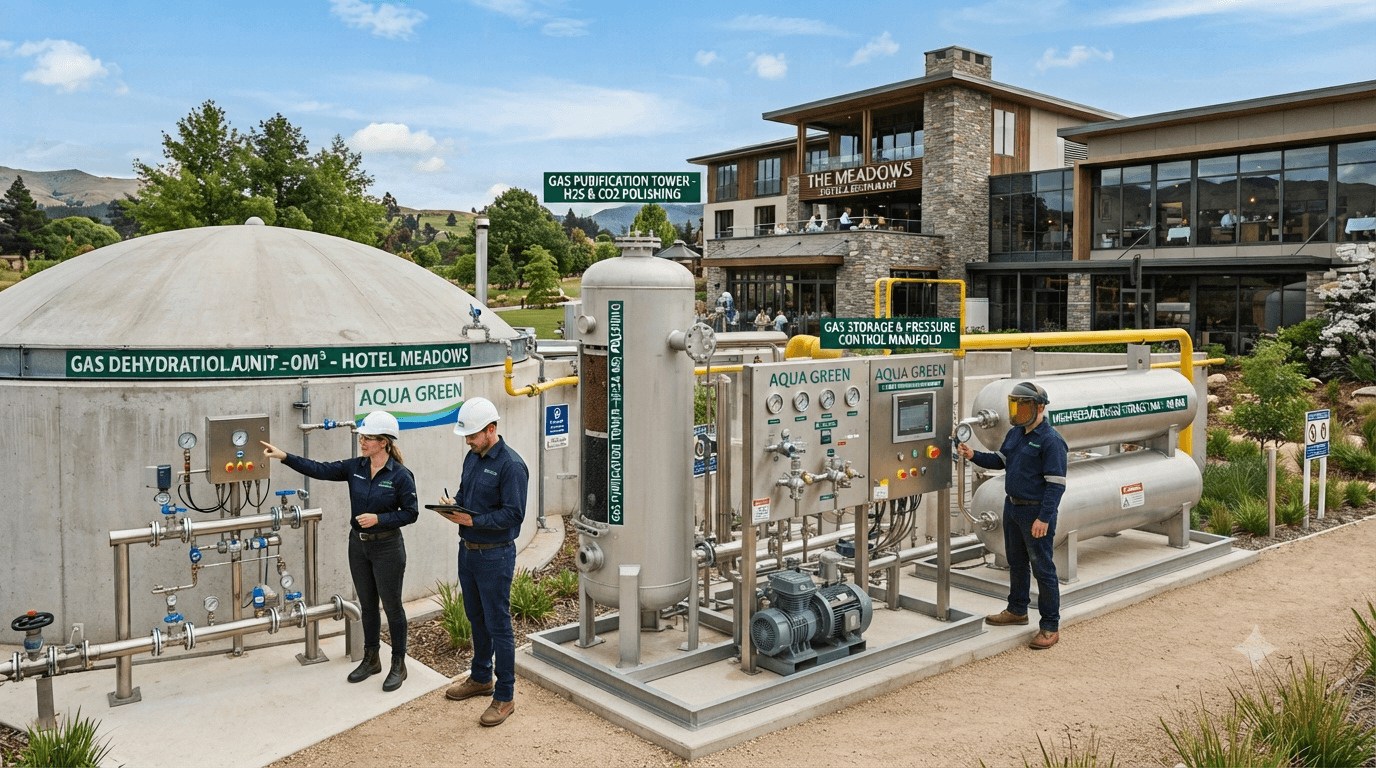
| Gas Use | Institutional kitchens, water heating and other designed thermal applications |
| Sanitation Integration | Available where structurally, hydraulically and operationally appropriate |
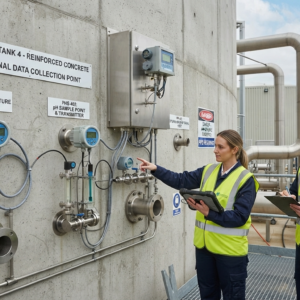
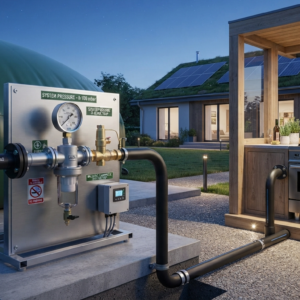
| Monitoring | Pressure, temperature, pH, loading and maintenance monitoring options |
| Gas Treatment | Moisture removal, hydrogen-sulphide filtration and additional purification as required |
| Final Specification | Confirmed following population, waste, energy and site assessment |
A Complete Engineering and Implementation Package
From Institutional Assessment to Handover
Consultation
We engage institutional leadership and define the project objectives.
Assessment
Population, waste streams, kitchens and sanitation systems are reviewed.
Design
The system is sized and integrated into the institution’s infrastructure.
Installation
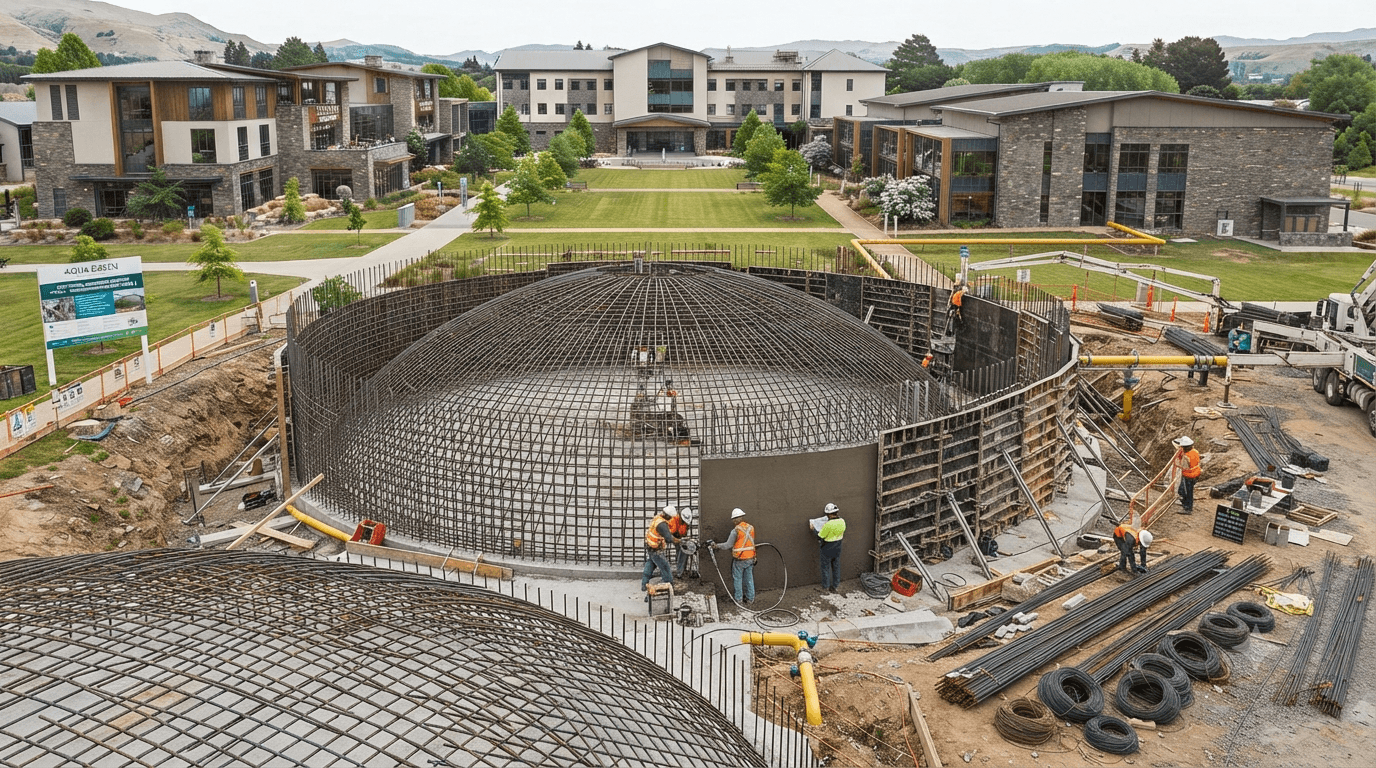
Construction, piping and supporting systems are implemented.
Handover
Testing, staff training and operational handover are completed.
Expand the System for Institutional Requirements
Institutional Projects Demand Integrated Planning
Dominion combines engineering design, sanitation assessment, construction supervision, gas utilisation, operational training and after-sales support in one coordinated institutional project.
Institutional Project Questions
Can the system use toilet waste?
Yes. Toilet waste can be integrated where the system is designed for appropriate hydraulic loading, sanitation control, gas safety and digestate management.
Can it supply the entire institutional kitchen?
The answer depends on the number of users, meals prepared, available waste and expected gas yield. A professional energy and waste assessment determines the realistic supply level.
Can an existing septic system be converted?
Some existing systems may be converted or integrated, but structural condition, sealing, hydraulic flow and gas-safety requirements must first be assessed.
Who operates the system after installation?
The institution should appoint trained operators responsible for feeding, monitoring, condensate drainage, filter servicing, record keeping and routine inspection.
Can the system support an institutional farm?
Yes. Suitable animal manure can support gas production, while properly managed digestate can be used within crop and soil-fertility programmes.
Why is the price not fixed?
Institutional systems vary significantly in population, waste volume, sanitation infrastructure, piping distance, appliances, purification, civil works and monitoring requirements.
Build Sustainable Waste and Energy Infrastructure for Your Institution
Share your institution’s population, kitchen operations, sanitation facilities, available feedstock and project location. Our engineering team will recommend an appropriate pathway.
Request an Institutional Quote
Dominion Biogas Services & Academy · Mile 4–6, Nkwen, Bamenda
www.dominionbiogas.com · +237 674 104 681
Avis
Il n’y a pas encore d’avis.